

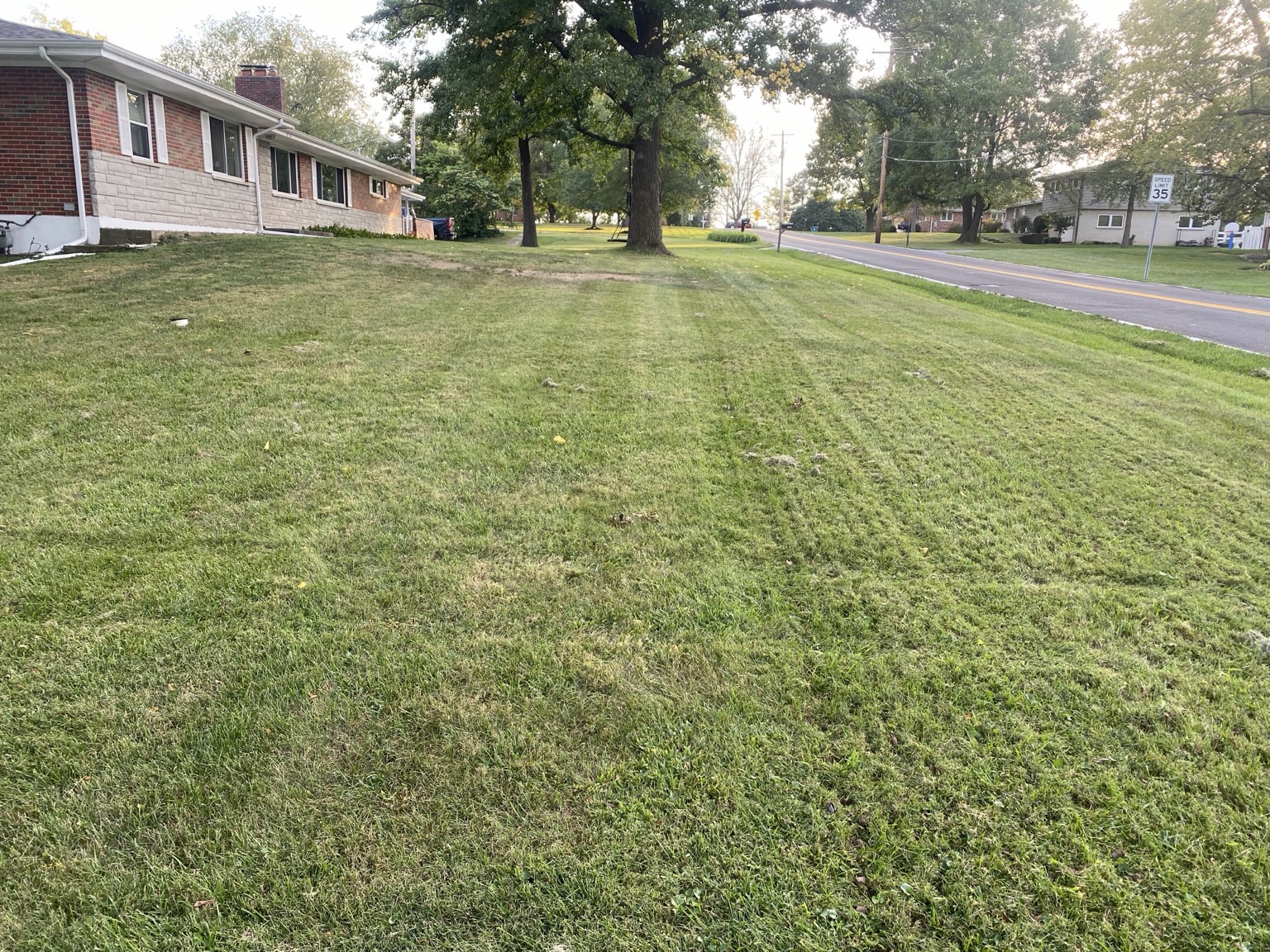
Lawn Aeration & Overseeding in Jefferson County & South County Communities
Core aeration and premium turf-type tall fescue overseeding designed to relieve soil compaction, improve seed-to-soil contact, and help build a thicker, healthier lawn.
Core Aeration & Overseeding for Cool-Season Lawns
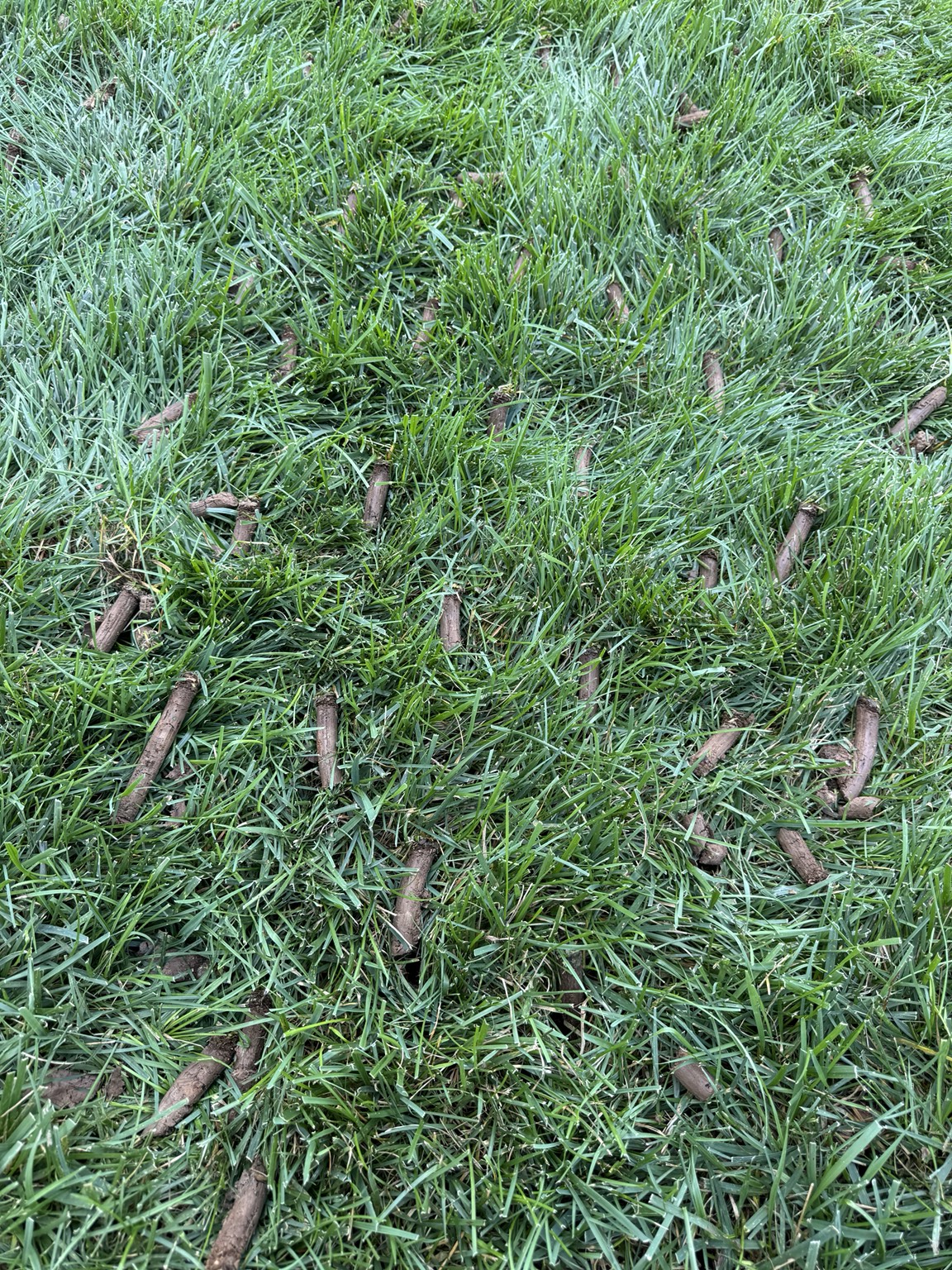
Heavy foot traffic, mowing equipment, weather, and naturally dense soils can compact a lawn over time. Compaction limits the movement of air, water, and nutrients into the root zone and makes it harder for grass roots to expand. Core aeration physically removes small plugs of soil to open the surface and create room for the soil around each core to loosen.
When overseeding is included, those openings also improve seed-to-soil contact. We use aeration as the seed-bed preparation step for established tall fescue lawns rather than routinely recommending dethatching.
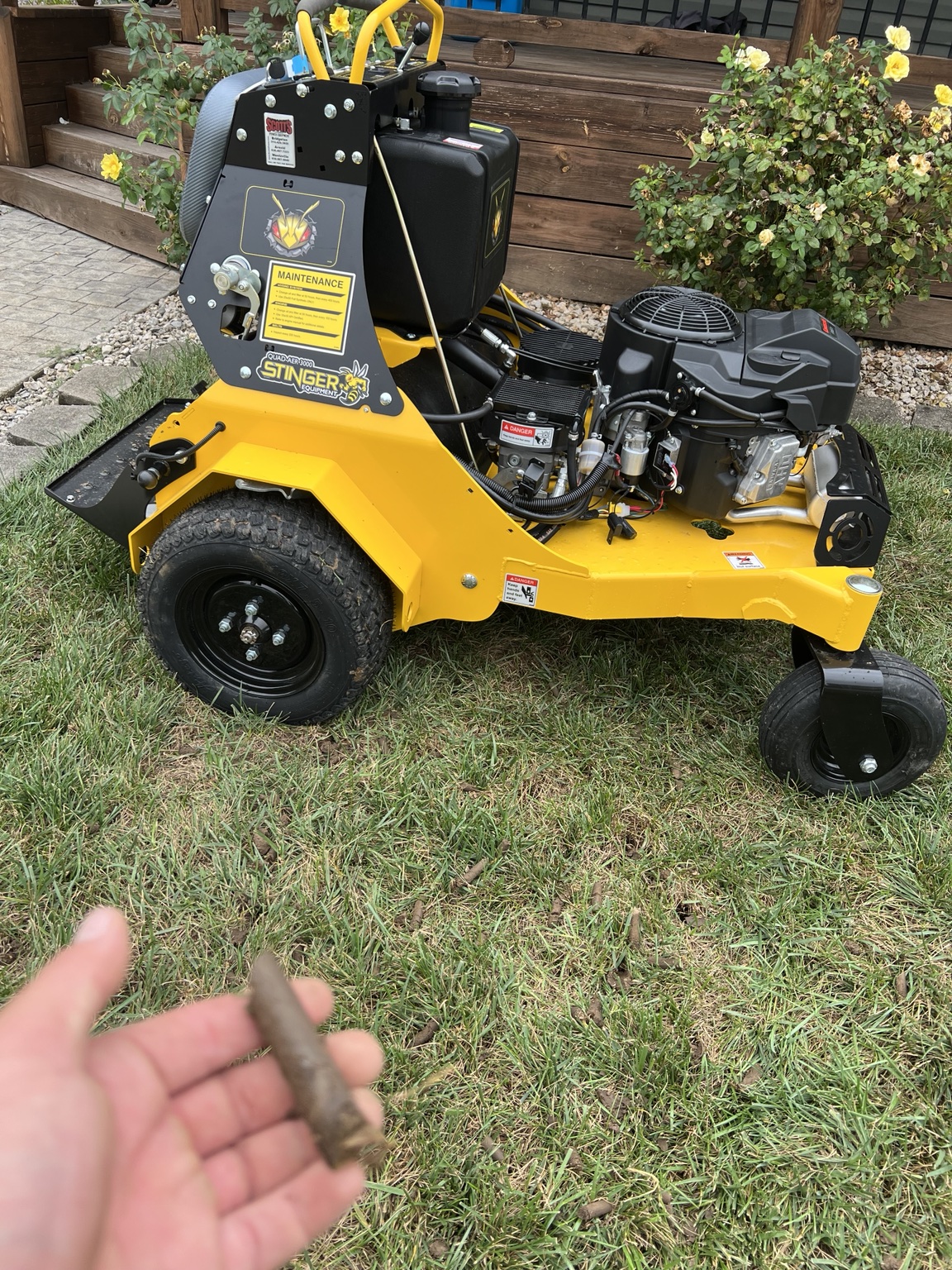
Professional Equipment Makes a Difference
Our primary aeration machine is a Stinger stand-on aerator with adjustable hydraulic down pressure. That lets us maintain consistent tine penetration as conditions change across a property. For lawns with limited access, we can use smaller equipment where needed.
Instead of simply rolling across the surface, a core aerator uses hollow tines to pull plugs from the soil. Those cores are left on the lawn to naturally break down while the openings improve airflow, water movement, and rooting space.
Premium Blue Tag Turf-Type Tall Fescue
We overseed with premium Blue Tag turf-type tall fescue, commonly called TTTF, at approximately 6–9 pounds per 1,000 square feet when conditions and the lawn call for full overseeding.
Modern turf-type tall fescues are bred specifically for lawns. They generally produce a finer blade, darker color, better density, and a more uniform appearance than older utility-type tall fescues.
TTTF Is Not the Same as Cheap K-31
Kentucky 31, or K-31, is also a tall fescue, but it is not the same product as modern turf-type tall fescue. K-31 is an older, coarser type commonly used where low seed cost and durability matter more than lawn appearance. It typically has a wider blade, lighter color, and a more clumping look. When K-31 is introduced into a finer turf lawn, those coarse plants can stand out.
Our goal is not simply to put inexpensive seed on the ground. We use better seed because the long-term density, color, texture, and appearance of the lawn matter.
Why We Recommend Fall Overseeding
For the tall fescue lawns common in our area, fall gives new grass the most reliable opportunity to establish before the following summer. Cooler temperatures and improving soil moisture reduce stress while the new turf develops a stronger root system.
Why Spring Overseeding Is Usually a Compromise
Spring overseeding creates a conflict with crabgrass prevention. A traditional pre-emergent program is designed to stop germinating weed seeds, and that can also interfere with the germination of newly applied grass seed. If you skip pre-emergent so the fescue can germinate, the young turf is then competing directly with crabgrass as temperatures rise.
A spring-seeded lawn can look encouraging early in the season. The trouble often develops later. As summer arrives, crabgrass becomes more aggressive and can fill thin areas quickly, competing with young fescue for sunlight, water, nutrients, and space. By mid-to-late summer, crabgrass can dominate areas that looked successful in spring. When frost eventually kills that crabgrass, the lawn may be thin or bare again.
For most established fescue lawns, we prefer to use spring for weed prevention and overall lawn health, then perform aeration and overseeding in the fall.
Benefits of Core Aeration & Overseeding
Relieves soil compaction: Removing soil cores creates space for the surrounding soil to loosen and improves conditions in the root zone.
Improves air and water movement: Open channels help water, oxygen, and nutrients move into the soil instead of remaining at the surface.
Improves seed-to-soil contact: Overseeding immediately after aeration gives seed more opportunities to reach exposed soil.
Helps thicken thin turf: Adding improved turf-type tall fescue varieties can increase density and improve the overall appearance of an established lawn.
Supports deeper rooting: Reducing compaction gives roots more room to expand into the soil profile.
Aeration & Overseeding FAQs
Do the soil plugs need to be picked up?
No. The cores are intentionally left on the lawn. They naturally break apart over time and return soil and organic material to the surface.
Do you recommend dethatching before overseeding?
Not routinely for typical tall fescue lawns. For most lawns we service, core aeration provides the soil opening and seed-bed preparation we want without unnecessarily tearing through healthy turf.
Can you aerate without overseeding?
Yes. Core aeration can be performed by itself when compaction relief is the primary goal. If the lawn is thin or needs improved turf density, aeration and overseeding are generally paired.
Do you offer starter fertilizer?
Yes. Starter fertilizer can be added to an aeration and overseeding service when appropriate, and it is available at a discounted rate when bundled with the service.
Aeration & Overseeding Service Area
We serve select communities throughout Jefferson County and South County, including Arnold, Imperial, Pevely, Fenton, Lemay, Sappington, Oakville, Herculaneum, Hillsboro, Festus, Crystal City, Barnhart, Antonia, Affton, Mehlville, Concord, Green Park, and Sunset Hills.
Not sure whether your property falls within our current route? Send us the address and we’ll let you know.
Request Your Aeration & Overseeding Quote
Enter your property information below and we’ll send pricing and availability.
Questions? Call Cardinal Lawn Care LLC at (314) 686-3907.